

How Do We Support Children’s Emotional Needs While Managing School Behaviors? Seclusion and Suspension Are Not The Answer.
By Jennifer Bertram
By: Jennifer Bertram, EdVoices Cohort Member, Social Worker, Advocate, and Parent of Two Children with Special Needs.
A school building is ripe with sensory overload and anxiety for children: fluorescent lighting, two dozen children in a classroom, pressure to learn math and reading, conflict with friends, and difficulty sitting still, even for children without added challenges like learning disorders, sensory processing disorders, mental illness, trauma, or neurodevelopmental disabilities. For children with additional needs to support regulation and behavior, a school day can be too overwhelming to manage without skills to help them calm their nervous system and self-regulate their young minds.
When a child misbehaves in school, their behavior can be disruptive to the other children and frustrating for the teacher. Funding cuts for schools can mean fewer staff to help manage classroom behavior and intervene in conflicts. Seclusion rooms have emerged as a temporary solution to a deeper problem. Temporarily removing a child from a classroom and placing them in isolation does little to recognize underlying causes for disruptive behavior, and can cause additional harm, for the child, their classmates, and staff.
Seclusion
In Minnesota, the use of a seclusion room is legal for grades 4 – 12. Here is how seclusion is defined in state statute:
“Seclusion” means a situation in which a child is confined alone in a room and is prevented from leaving. Before using a room for seclusion, a school must “receive written notice from local authorities that the room and the locking mechanisms comply with applicable building, fire, and safety codes” and register the room (Minnesota Statutes, section 125A.0942, subd. 3(a)(7)).
Effective September 1, 2024, school districts are prohibited from using seclusion on children from birth through grade 3. Based upon that prohibition, school district staff are not authorized to use seclusion on children from birth through grade 3 as an emergency procedure for students with disabilities under the reasonable force statute (Minnesota Statutes, section 121A.582).
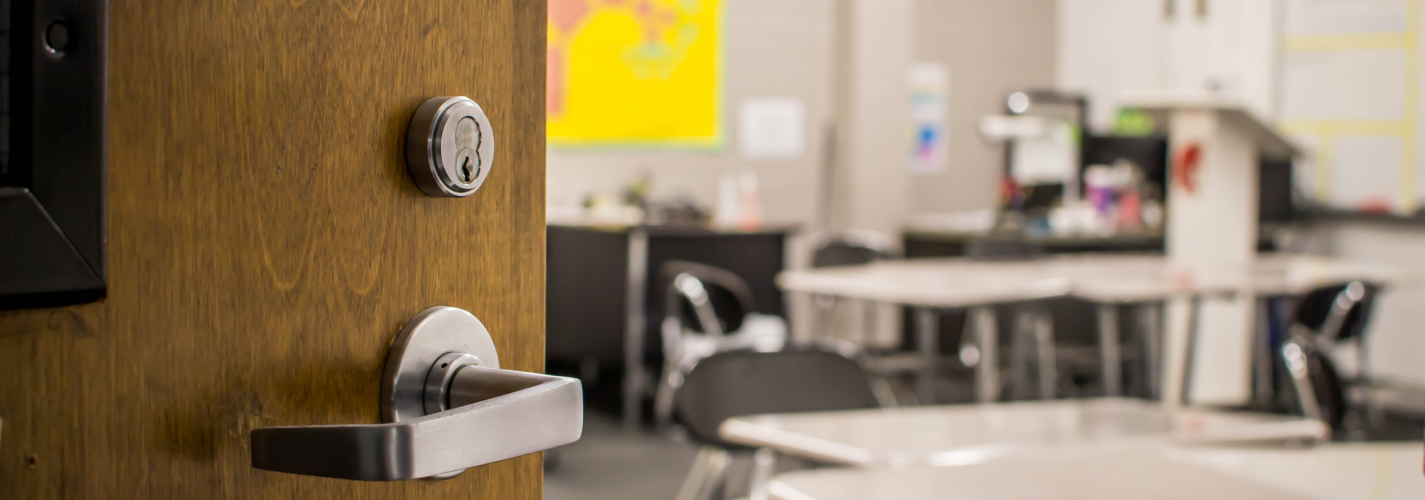
Schools may use the term ‘calming room,’ ‘quiet room,’ ‘thinking room’ or one of many other euphemisms to mean the same thing: a bare room in which a child is detained in isolation without access to food, water, restrooms or calming methods[1].
One girl’s experience
A girl in fourth grade, “Kaya[2]” refused to participate in gym class one day. The gym teacher reiterated that she had to participate in the activity. She then said that she wanted to die. The social worker came to get her and she was placed in an isolation room. The principal called the mother and told her that Kaya was safe and she could pick her up at the end of the day, but suggested that she be screened at the hospital for suicide risk. Kaya had an ADHD diagnosis, and would later be diagnosed with Autism. At the time, she had no IEP or 504 plan, and no special education services. Her mother took her to the hospital after school to be evaluated for mental illness and suicide risk, and the team determined that she was not suicidal, but was unwilling to participate in gym class and could not articulate her needs effectively in a moment of elevated emotions.
In a different school, this same girl witnessed a child being placed in a closet inside the school’s resource room for children with disabilities with the door locked. She and other children in the room witnessed the child’s crying, pounding on the door, and pleas to be released. Kaya continues to recount the fear she experienced hearing the child crying and pounding on the door.
This incident has had a lasting traumatic effect on Kaya with increasing anxiety in school buildings for years to come, and refusal to participate in classroom settings. One interaction with a gym teacher and the response by the school, and one incident of witnessing a child placed in seclusion, have traumatized this girl for several years. Now this bright, spirited, creative girl is in high school, but has significant anxiety and depression and often refuses to attend school, putting her future career development at risk.
How many other children barely tall enough to reach a light switch in Minnesota have experienced an incident at school in which they were defiant or dysregulated? When they were overstimulated or experiencing loss, needing support but instead were placed in isolation? What are the long-term effects of this experience for children? Rather than tune into their needs, offer support, and identify a response that recognized their behavior as overstimulation or anxiety, the response was to place them in a small, bare room alone.
Effective Alternatives to Seclusion and Suspension
According to Stop School Seclusion, schools regularly overuse seclusion rooms for minor behavioral concerns. The consequences of this common practice has lead many children to experience long-term anxiety. They point to a systemic failure in equipping schools with adequate resources and training on de-escalation. Alternatives can include “positive behavioral interventions and supports (PBIS), trauma-informed care, and strategies that address the underlying causes of challenging behaviors rather than punishing the symptoms[3].”
Edutopia offers 19 ways to help children regulate their emotions and behaviors proactively and in response to dysregulation.[4] Some of those include teaching relaxing body movements, breathing exercises, sensory breaks, and calming sounds – rain sticks, chimes, or sound bowls, art breaks.Miss Kendra Programs[5] provide a curriculum to teach social-emotional regulation and help children process their big emotions. This inexpensive program has proven to reduce seclusion and suspension by 75% and create calmer classrooms by offering children safe spaces to share their worries so they can focus more on their schoolwork.
School administrators and staff have many resources and strategies available to de-escalate behavior problems, prevent dysregulation, and support children’s social development without having to end the ban on seclusion rooms for our youngest students. Provide funding to schools for training and continue to build on alternative strategies for conflict resolution. These children are our future, and our future leaders should be treated with dignity and respect, and be given our best tools to thrive.
Jennifer Bertram is a social worker, advocate and parent of two children with special needs who shares her story and uses her advocacy skills to inform decision-makers of the gaps in educational systems that can be rectified so that all children can thrive. She was also a member of EdAllies 2025 EdVoices cohort.
[1] https://adayinourshoes.com/seclusion-room-kids-school/

[2] Not her real name

[3] https://stopseclusion.com/what-are-seclusion-rooms/

[4] https://www.edutopia.org/article/elementary-student-strategies-for-self-regulation/

[5] https://misskendraprograms.com/

The preceding blog was authored by a member of the 2025 EdVoices cohort. Through our EdVoices program, EdAllies seeks to elevate diverse voices and foster a candid dialogue about education. While we provide our blog as a platform for EdVoices and other guest contributors, the views and opinions they express are solely their own.