
Holding the Line for Students in a High-Stakes Session
By Matt Shaver
In addition to the breakdown of the 2026 legislative session below, EdAllies will be hosting a virtual session recap even on June 2 at 12pm. You can RSVP and tune in here.
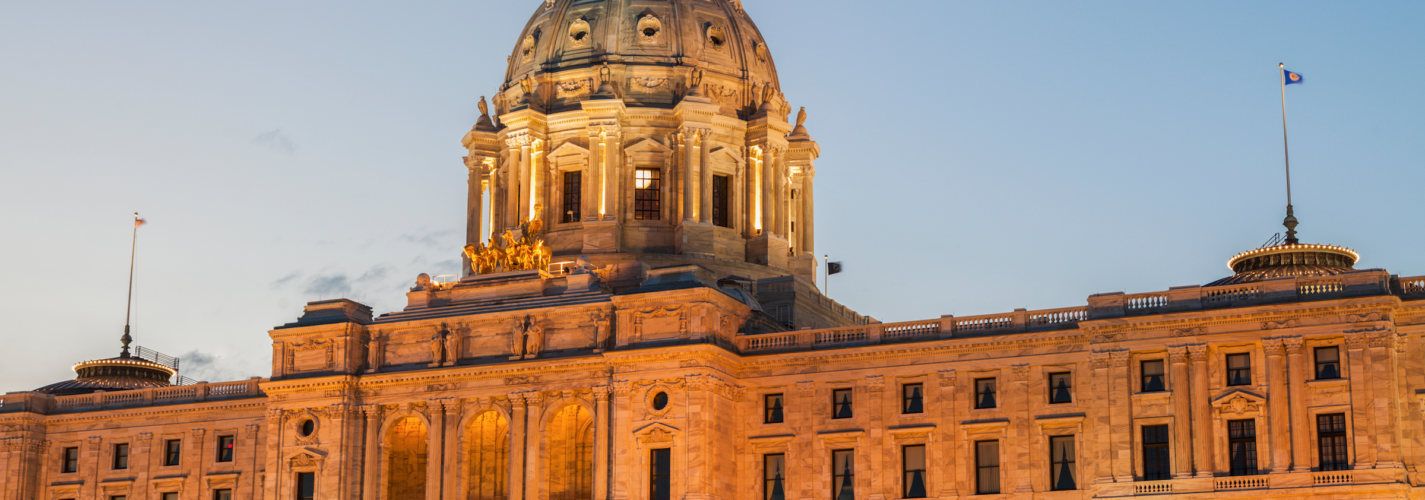
Legislators came to the Capitol this year with a recipe for gridlock: a non-budget year with all 201 seats up for election, an open Governor’s race, and the shadow of a fraught political climate. And while that certainly played out on the biggest issues of the day—with no meaningful agreement on how to address gun violence and or how to respond to Operation Metro Surge—there were meaningful steps forward on a few key issues.
It was an uphill battle to be sure. In the evenly divided House, Republican legislators’ top priority was for Minnesota to opt into a new federal tax credit that would allow individuals to contribute to scholarship funds and receive up to $1,700 back, dollar-for-dollar, on their tax refund. Scholarships can support tutoring, special services, technology and materials, and private school tuition, which made the issue into a political third rail. House Republicans drew a line in the sand: no education policy would advance without a provision to opt into the credit, and Governor Walz responded with equally staunch opposition. While some education bills did move through the House, they did not develop any education omnibus proposals and only acted on a few focused or essential provisions.
What Made it Across the Finish Line
Throughout session, the issues that loomed largest in education policy were around school safety and school funding. While it fell far short of what advocates and school districts were hoping for, these were the two areas that saw any investment at all once the session gaveled out. The biggest policy win was a bill that came together on the final day of session to strengthen the Read Act and ensure new teachers have field experience in literacy.
Here’s the breakdown of what actually passed:
- Literacy Bill Beats the Buzzer: Minnesota has made evidence-based literacy instruction a top priority for the past several years, and despite there being no education omnibus bill in the House—alongside a Senate education policy omnibus that never made it to a floor vote—the work kept moving in 2026. This year, advocates were pushing for a new requirement that teacher candidates in Minnesota complete a field experience in literacy instruction that’s improved and better aligned to the Read Act before completing teacher prep. Several programs around the state have been piloting the concept and seeing their graduates enter the field far more prepared to effectively teach kids to read. In the last hours of session, when many thought education work was done for the year, a bill came together to pass this requirement into law. The bill also makes updates to the Read Act around the curriculum review process, teacher training requirements, and other tweaks that had been vetted during session but failed to advance through other bills. The bill passed on unanimous votes in both bodies, showing that sometimes policymaking is simply a matter of diligence and will.
- Anti-Grooming Policy Advances: In another unanimous effort, legislators adopted new language to identify and criminalize student maltreatment in the form of grooming. This bill came from the personal advocacy of Hannah LoPresto and the investigative reporting that told her story.
- Student Safety: The big school safety debate this year focused on how to address gun violence in the wake of the tragic attack at Annunciation this fall. While the most notable proposals to address the crisis failed (gun control measures passed the Senate but were blocked in the House, and efforts to increase School Safety Aid and expand it to charter and private schools didn’t make the final cut), a few provisions made it into law. The education finance bill invests in new anonymous threat reporting requirements, and school-linked mental health grants received a boost within the Health and Human Services bill.
- A School Funding Band-Aid: This year, schools were ringing the alarm bell around compensatory revenue—the state’s formula for supporting students in poverty—that was facing a cliff due to increasingly inaccurate student counts. Last year, the legislature created a task force to explore long-term improvements to how we allocate and invest compensatory dollars, but in the meantime, many districts were facing a loss of potentially millions for the coming school year. While the legislature did not invest enough to fully fix the problem, they put some money towards it—one of just two items, along with anonymous threat reporting, to see any new education dollars in 2026. Check out Josh Crosson’s op-ed in the Minnesota Reformer for a good deep dive on this subject.
A few other bills advanced, including a forecast adjustment bill that wove in a few small policy tweaks and a Constitutional amendment that voters will see on the ballot box this fall. If voters approve the measure, schools could see more funds via the state school trust lands. On the higher education side, legislators prioritized foster youth by closing a funding gap for the Fostering Independence Grant program.
Holding the Line: Important Defensive Wins
Sometimes progress is measured by what didn’t happen. This session, we worked with coalition partners to push back on a few proposals that would have undermined school climate and academic opportunity:
- Protecting Safe and Welcoming Schools: Last session, legislators established a task force to explore the use of seclusion in schools, which was banned for K-3 students in 2023. While the task force found common ground on several proactive measures for expanding alternatives, whether to bring back the practice for the youngest students was an open question coming into session. At the same time, there was a push to roll back limits on suspensions for K-3 students, either completely or in part. After significant debate, neither the Senate nor the House moved any of these proposals to the floor, keeping current limits on suspension and seclusion for K-3 students in place.
- Preserving PSEO Access: In recent years, there has been growing scrutiny of the PSEO program, including the financial ramifications and how course credit is granted. After significant debate about the program’s goals and benefits—which are particularly strong for historically underserved students—and discussion of programmatic questions around funding, access, and quality, the legislature decided it was premature to make changes, but ripe for further exploration from the Office of the Legislative Auditor (OLA). The OLA is currently vetting whether to select the topic for its next round of reports.
Where Students Still Need Action
The most difficult part of the 2026 session was seeing urgent priorities—many of which have been building for years—get lost in the partisan process of a shorter, non-budget session. While a few things got through, there were no meaningful education omnibus bills or conference committees between the House and Senate like we see in most years. On funding, two priorities got through. On policy, it was just as thin. This means a lot of debate happened, but a lot of hard work is waiting in the wings.
- The Attendance Crisis: For the past two years, legislators have taken action to address the attendance crisis, creating a working group, funding a 12-district attendance pilot program, and making essential policy changes to help get all kids engaged in school. This year, the legislature left a common-sense proposal on the table to create an Interagency Council on Attendance. In recent years’ work, what’s clear is that schools can’t tackle the issue alone: barriers to consistent attendance often fall outside the control of schools and are tightly linked to housing, transportation, social services, and more, and the council would have created a space for that silo-breaking work to happen. This should be a priority for the next Governor.
- Supporting Immigrant Students: In a 1982 ruling, Plyler v. Doe, the Supreme Court set a precedent ensuring that all children have access to a free public education, regardless of immigration status. Now, that critical foundation is under threat as immigration becomes a polarized issue across the country. EdAllies worked with the local Push Forward coalition to ensure that no matter what happens at the federal level, children living in Minnesota will be guaranteed safe access to school. While this proposal passed the Senate as part of a larger package responding to Operation Metro Surge, it was not given a vote in the House and should be a top priority coming out of the gate in 2027.
- Direct Admissions: Seeking to expand on the promising early outcomes of this collaboration between the Office of Higher Education and high schools to ensure all Minnesota students know before they graduate which of the more than 50 Minnesota-based postsecondary institutions they are automatically accepted into, legislation to bring this voluntary program statewide stalled out despite being included in the initial Senate Higher Education bill.
- Literacy Aid Reform: Perhaps most frustratingly, the legislature failed to make a needed fix to Literacy Aid—not even a temporary tweak—when the formula is in dire need of both long-term reform and an immediate stopgap. Short-term, new ELA standards and a new reading MCA this spring make the current formula—the only state funding formula linked to test scores—temporarily obsolete. The legislature gaveled out, leaving critical implementation decisions entirely up to the Minnesota Department of Education (MDE) without legislative guidance for how the dollars that fund the ongoing implementation of the Read Act are distributed. Inaction on the long-term issues with the formula—whereby schools with fewer struggling readers receive more funding—means there will continue to be inequities and unpredictability in this formula and fewer dollars traveling to support schools where reading needs are the highest.
- Special Education Funding: Last year, the legislature tasked a Blue Ribbon Commission on Special Education with cutting an arbitrary $250 million in overall spending, while addressing long-overdue issues with special education funding formulas. This year, there was bipartisan support for repealing this future cut. However, repealing the cut would have required additional global budgetary shuffling that legislative leadership either lacked the capacity or interest in undertaking.
- Teacher Licensure Pathways: The Professional Educator Licensing and Standards Board (PELSB) proposed to add a new pathway to receive a Tier 2 license, allowing for candidates enrolled in out-of-state teacher preparation programs to qualify for this more stable license level. Despite there being widespread support and early momentum for this common-sense improvement, in a year without major omnibus bills, it failed to gain traction alongside several other PELSB agency proposals, leaving too many strong Tier 1 teachers without a clear or feasible path to move to the next tier.
Looking Ahead
The key takeaway for 2026 is that coalition work carried the day. From protections for immigrant students to school funding to school discipline, community leaders and everyday Minnesotans came together to make progress against strong headwinds, building champions who can carry the work into 2027 on critical student needs that remain unaddressed. Once the dust settles after the fall elections, there will be a long list of priorities that legislators must take up to give our students the schools they deserve.